
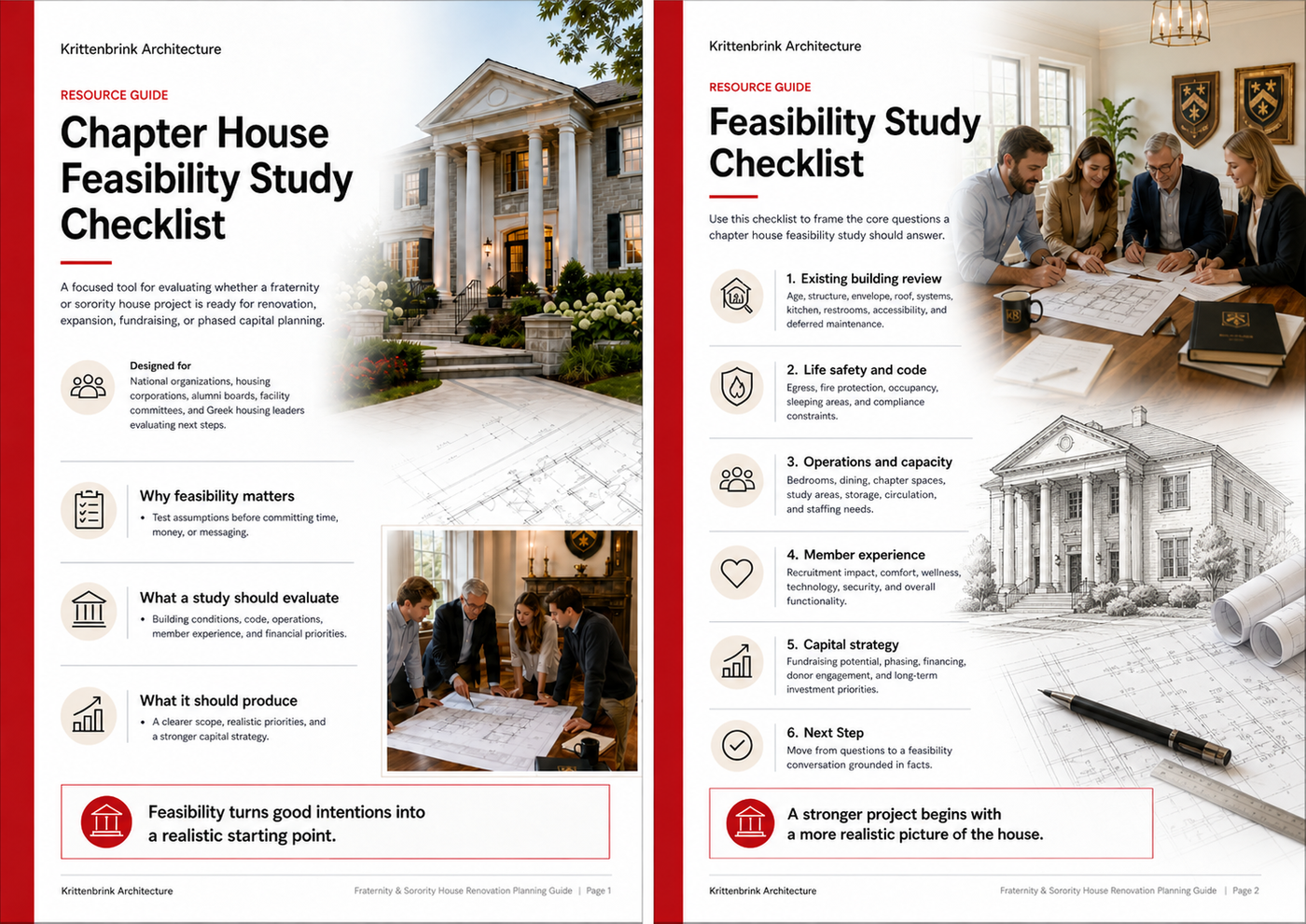
A feasibility study helps fraternity and sorority housing leaders evaluate building conditions, code, operations, member experience, and capital strategy.
Before a fraternity or sorority house project becomes a renovation campaign, construction estimate, or fundraising message, it needs a realistic starting point. A chapter house feasibility study helps housing leaders understand the building, test assumptions, and identify the path forward.
For housing corporations, alumni boards, national organizations, and facility committees, feasibility is not just a technical step. It is a decision-making tool. It helps clarify what the house needs, what the organization can support, and how design decisions can strengthen safety, operations, recruitment, and long-term value.
A strong feasibility study turns broad ideas into informed priorities.
Why Feasibility Matters
Many chapter house projects begin with a list of visible problems: aging bathrooms, outdated kitchens, HVAC issues, roof concerns, accessibility barriers, or spaces that no longer support modern chapter life. But what appears obvious at first may only be one part of the larger picture.
A feasibility study helps test assumptions before an organization commits time, money, or messaging to a project direction.
Review the Existing Building
The first step is understanding the house as it exists today. This may include reviewing the age of the building, structural systems, envelope, roof, mechanical systems, electrical systems, plumbing, kitchen, restrooms, accessibility, and deferred maintenance.
This information helps leaders separate cosmetic concerns from deeper building issues that may affect cost, schedule, phasing, or long-term performance.
Evaluate Life Safety and Code
Chapter houses have unique life safety demands because they often combine residential, assembly, dining, study, and gathering uses. A feasibility study should consider egress, fire protection, occupancy, sleeping areas, stairways, accessibility, alarms, sprinklers, and compliance constraints.
Addressing these issues early can help avoid expensive surprises later.
Understand Operations and Capacity
A chapter house must support both daily life and major organizational events. Bedrooms, dining, chapter spaces, study areas, storage, circulation, kitchen operations, parking, staff areas, and alumni use all matter.
Feasibility planning helps determine whether the house can continue to serve the chapter well or whether the organization needs a more substantial renovation, addition, or phased capital plan.
Consider Member Experience
A strong chapter house supports recruitment, retention, comfort, wellness, technology, security, and connection. Member expectations have changed, and many older houses need to be modernized without losing the identity that makes them meaningful.
Feasibility helps identify the balance between preservation and improvement.
Connect the Study to Capital Strategy
A feasibility study should not simply identify problems. It should help create a realistic capital strategy. This may include fundraising potential, financing, donor engagement, phasing, educational square footage goals, and long-term investment priorities.
A stronger project begins with a more realistic picture of the house.
Ready to Evaluate a Chapter House?
Krittenbrink Architecture helps fraternity and sorority housing leaders understand existing conditions, define priorities, and prepare for renovation, addition, modernization, or capital planning.
Download the Chapter House Feasibility Study Checklist or contact Krittenbrink Architecture to begin the feasibility conversation.