Plan a church or community building project with clarity around mission, welcome, programs, facilities, stewardship, phasing, and long-term growth.
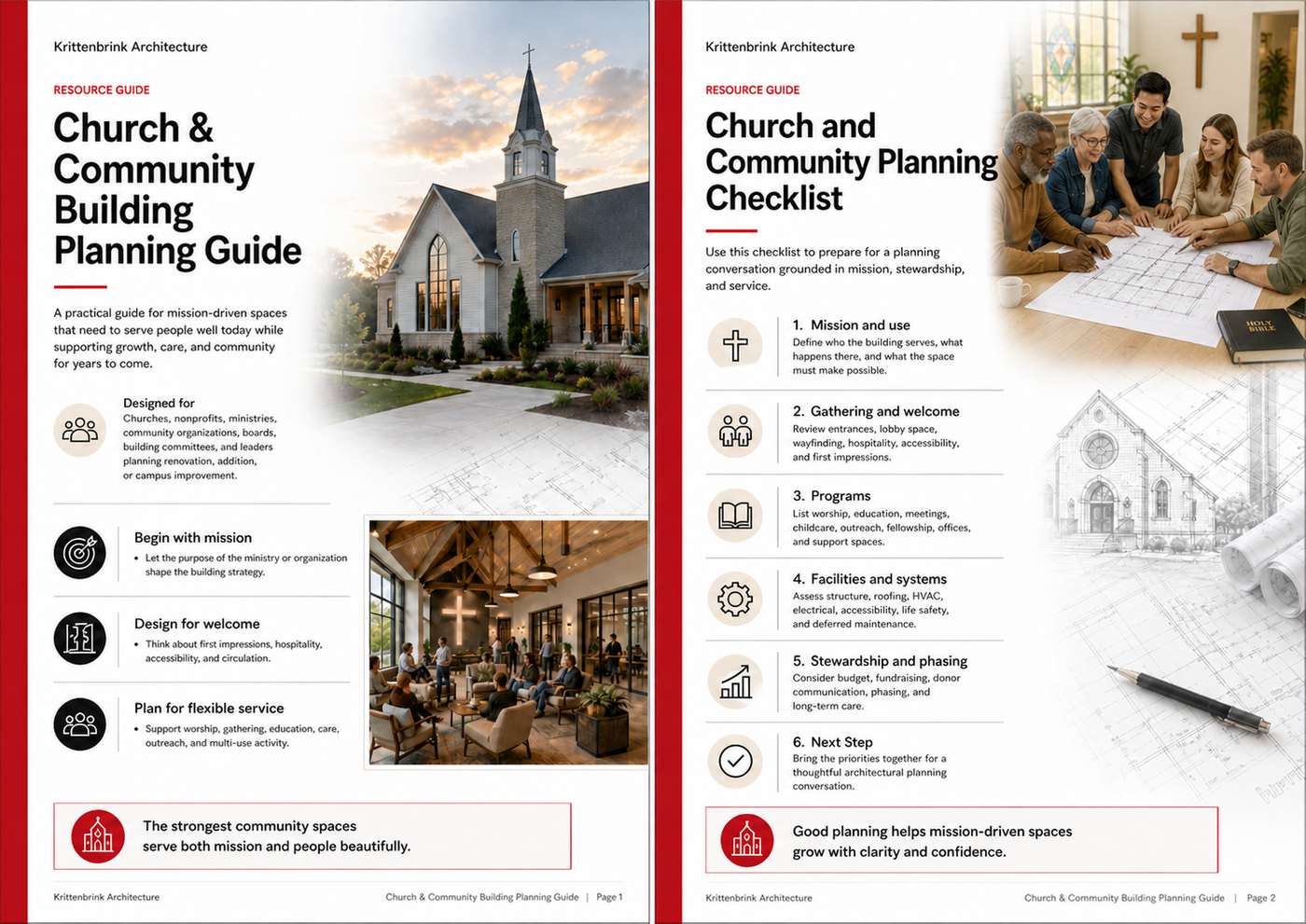
Churches and community buildings carry a purpose beyond the walls themselves. They are places of worship, gathering, service, education, care, outreach, and connection. When these spaces need renovation, addition, or campus improvement, the planning process should begin with mission.
A strong church or community building project is not only about adding space. It is about understanding who the building serves, what happens there, and what the space must make possible for years to come.
Good planning helps mission-driven spaces grow with clarity and confidence.
Begin with Mission
Before design begins, leaders should define the purpose of the project. What ministry, service, or community need is driving the work? What does the building need to support now, and what might it need to support in the future?
Mission should shape the building strategy from the beginning.
Design for Welcome
The arrival experience matters. Entrances, lobby space, wayfinding, hospitality, visibility, accessibility, parking, and circulation all affect how people feel when they enter the building.
For churches and community organizations, design should support welcome, clarity, dignity, and ease of use.
Understand Programs and Space Needs
Church and community buildings often support many functions: worship, education, childcare, meetings, fellowship, counseling, outreach, administration, events, and community service.
Early planning should identify which programs need space, which spaces can be shared, and where flexibility is most valuable.
Review Facilities and Building Systems
Many churches and community buildings operate in older facilities. Structure, roofing, HVAC, electrical, plumbing, accessibility, life safety, restrooms, entrances, and deferred maintenance should be evaluated early.
Understanding the building’s condition helps leaders plan responsibly.
Consider Stewardship and Phasing
Mission-driven organizations must often balance vision with budget, fundraising, donor communication, phasing, and long-term care. A phased strategy may help the organization move forward without overextending resources.
Good stewardship means making decisions that serve both today’s needs and tomorrow’s possibilities.
Bring Priorities Together
A thoughtful architectural planning conversation helps leaders align mission, use, budget, schedule, existing conditions, and long-term goals.
The strongest community spaces serve both mission and people beautifully.
Planning a Church or Community Building Project?
Krittenbrink Architecture helps churches, nonprofits, ministries, boards, and community organizations plan renovations, additions, campus improvements, and mission-driven spaces.
Download the Church and Community Building Planning Guide or contact Krittenbrink Architecture to begin a planning conversation.