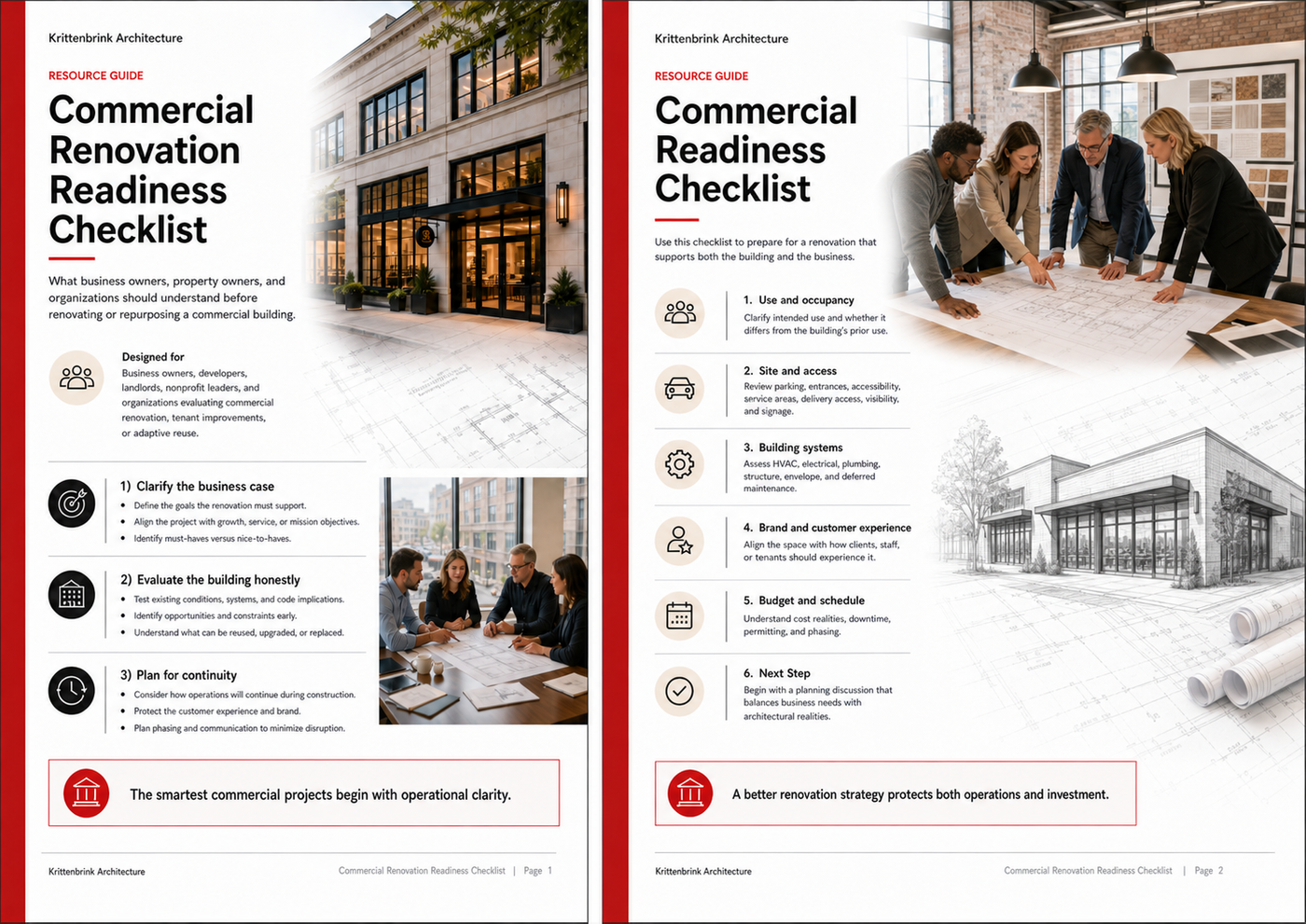
Prepare for a commercial renovation with a checklist for use, occupancy, access, building systems, brand, budget, schedule, and operations.
Commercial renovation is not just about improving the appearance of a building. It is about aligning the space with the business, the people it serves, the operations it supports, and the long-term investment it represents.
For business owners, property owners, developers, landlords, nonprofit leaders, and organizations, a successful commercial renovation starts with understanding both the building and the business case.
The smartest commercial projects begin with operational clarity.
Clarify the Business Case
Before beginning a commercial renovation, define what the project must support. Is the goal to serve customers better, improve staff experience, support growth, reposition the property, improve accessibility, modernize systems, or adapt the building for a new use?
Clear business goals help guide design decisions.
Review Use and Occupancy
Commercial buildings are shaped by how they are used. If the intended use differs from the building’s prior use, there may be code, occupancy, accessibility, parking, life safety, or permitting implications.
Early architectural review helps identify these issues before they affect cost and schedule.
Evaluate Site and Access
A commercial renovation should consider parking, entrances, visibility, signage, service access, delivery routes, accessibility, circulation, and customer arrival experience.
The way people enter and move through a property can affect both operations and brand perception.
Assess Building Systems
Existing building systems can significantly affect renovation scope. HVAC, electrical, plumbing, structure, envelope, roof conditions, and deferred maintenance should be reviewed early.
A building may look ready for renovation on the surface while still requiring deeper system improvements.
Align Brand and Customer Experience
For commercial projects, the built environment communicates value. The space should support how clients, customers, staff, tenants, or visitors experience the organization.
A strong renovation strategy connects design with brand, service, comfort, and function.
Plan for Budget, Downtime, and Phasing
Commercial renovations often need to protect operations while work is underway. Budget, permitting, downtime, phasing, communication, and continuity should all be part of the early planning conversation.
A better renovation strategy protects both operations and investment.
Planning a Commercial Renovation?
Krittenbrink Architecture helps business owners, property owners, nonprofits, and organizations evaluate commercial renovation, tenant improvement, adaptive reuse, and building modernization opportunities.
Download the Commercial Renovation Readiness Checklist or contact Krittenbrink Architecture to begin planning.