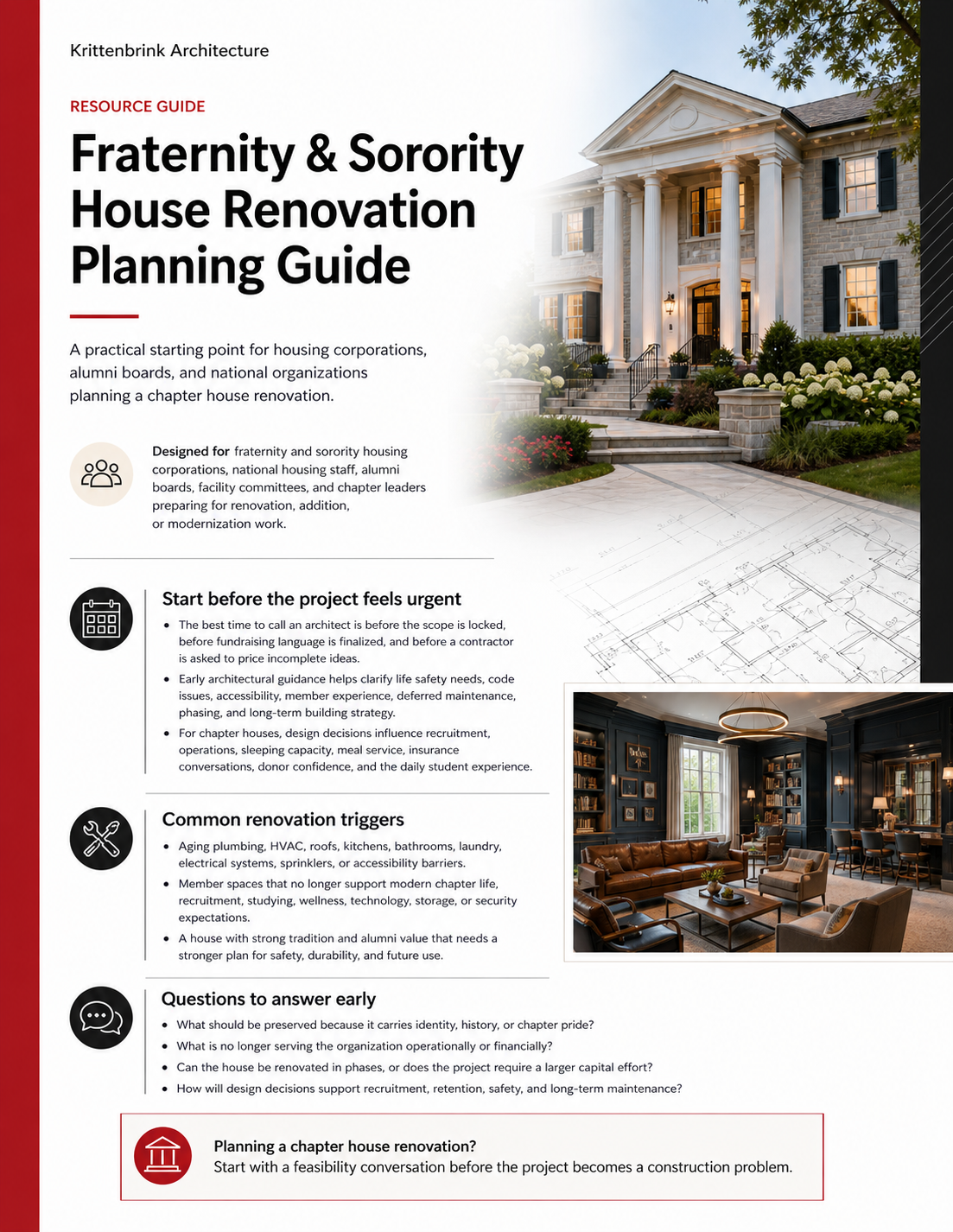
Planning a fraternity or sorority house renovation? Learn when and why to call an architect, what to evaluate early, and how to protect tradition, safety, and long-term value.
Fraternity and sorority houses are more than residential buildings. They are gathering places, recruitment spaces, alumni touchpoints, symbols of tradition, and daily homes for student members. When these buildings need renovation, addition, or modernization, the process should begin with more than a contractor estimate or a wish list of improvements.
A successful chapter house renovation starts with early architectural planning. Before the scope is locked, before fundraising language is finalized, and before construction pricing begins, housing leaders need a clear understanding of the building’s condition, operational needs, code requirements, life safety priorities, member experience, and long-term capital strategy.
At Krittenbrink Architecture, we help fraternity and sorority housing corporations, alumni boards, national organizations, and facility committees evaluate what should be preserved, what needs to change, and how design can support the future of chapter life.
When Should You Call an Architect for a Fraternity or Sorority House Renovation?
The best time to call an architect is before the project feels urgent. Early architectural guidance helps prevent costly assumptions and gives the organization a stronger foundation for decision-making.
For chapter houses, design decisions can affect recruitment, retention, sleeping capacity, dining, study space, accessibility, life safety, donor confidence, insurance conversations, and long-term maintenance. Waiting until after the project is already defined can limit your options and create unnecessary expense.
Common Signs a Chapter House May Need Renovation
Many fraternity and sorority house projects begin because the building is showing signs of age or no longer supports modern chapter life. Common renovation triggers include aging plumbing, HVAC systems, roofs, kitchens, bathrooms, laundry areas, electrical systems, sprinklers, security needs, and accessibility barriers.
Other times, the building may still carry strong alumni value and architectural identity, but the interior spaces no longer support recruitment, studying, wellness, technology, storage, dining, or daily operations. In those cases, the goal is not simply to replace what exists. The goal is to protect what matters while improving how the house functions.
What Should Be Preserved?
One of the most important early questions is what should be preserved because it carries identity, history, or chapter pride. Chapter houses often hold architectural details, entry sequences, formal rooms, exterior character, and symbolic spaces that alumni and members deeply value.
Good design does not erase tradition. It clarifies what is worth protecting, then creates a thoughtful path for modernization around it.
What Should Be Evaluated Early?
Before a chapter house renovation moves forward, housing leaders should evaluate ownership and governance, building priorities, life safety, code, accessibility, deferred maintenance, operations, capital strategy, phasing, and long-term maintenance.
This early planning stage helps answer key questions:
Who owns the property?
Who approves capital decisions?
What spaces are no longer serving the organization?
Can the project be phased?
How will the renovation support fundraising and donor confidence?
How will the design improve recruitment, retention, safety, and daily member experience?
Start with a Feasibility Conversation
A feasibility conversation helps turn broad ideas into a clearer plan. It allows the organization to align scope, schedule, budget, decision-makers, and long-term goals before design or construction begins.
For fraternity and sorority housing, this step is especially valuable because the house must serve many purposes at once: home, gathering space, recruitment tool, tradition keeper, operational asset, and long-term investment.
Planning a Chapter House Renovation?
Krittenbrink Architecture works with fraternity and sorority housing leaders to evaluate renovation, addition, modernization, feasibility, and long-term capital planning needs.
Download the Fraternity and Sorority House Renovation Guide and contact Krittenbrink Architecture to begin a feasibility conversation before the project becomes a construction problem