
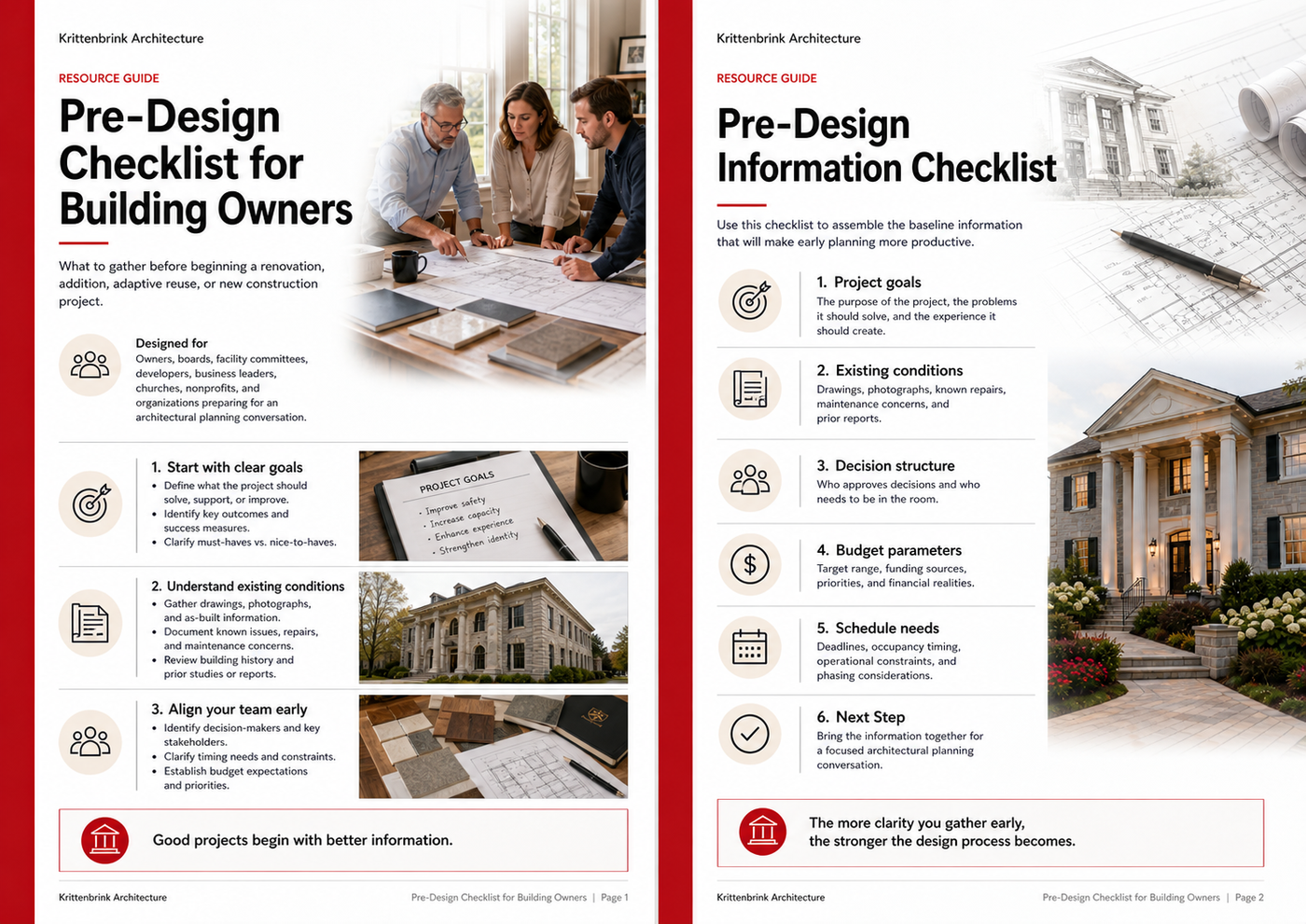
Prepare for a stronger building project with a pre-design checklist for goals, existing conditions, decision-makers, budget, schedule, and constraints.
Before design begins, the strongest projects start with better information. Pre-design is the early planning stage that helps business owners, building owners, boards, facility committees, developers, churches, nonprofits, and organizations prepare for a productive architectural conversation.
This stage is not about having every answer. It is about gathering enough information to make better decisions about scope, budget, schedule, priorities, and constraints.
A clear pre-design process helps reduce confusion and creates a stronger foundation for renovation, addition, adaptive reuse, or new construction.
Start with Clear Project Goals
Before meeting with an architect, define what the project should solve, support, or improve. Is the goal to increase capacity, improve safety, modernize operations, support growth, improve customer experience, update building systems, or create a better environment for the people using the space?
Clear goals make the planning process more productive from the beginning.
Understand Existing Conditions
Gather available drawings, photographs, building history, known repairs, maintenance concerns, and prior reports. Even incomplete information can be helpful.
Existing conditions often shape what is possible, what may be expensive, and where the project should focus first.
Identify Decision-Makers
Every project needs a clear decision structure. Determine who approves decisions, who should be involved in meetings, and who needs to provide input before major steps are taken.
This is especially important for boards, building committees, business partners, church leadership, nonprofits, housing corporations, and organizations with multiple stakeholders.
Establish Budget Parameters
A budget does not have to be final in the pre-design stage, but it does need to be discussed. Owners should consider target ranges, funding sources, financial realities, and priorities.
Early budget clarity helps the design team align recommendations with what the organization can reasonably support.
Clarify Schedule Needs
Timing can shape the entire project. Consider deadlines, occupancy needs, seasonal operations, business interruptions, academic calendars, church programming, fundraising timelines, permitting, and phasing.
A strong schedule strategy begins with understanding the constraints.
Bring the Information Together
Pre-design helps turn scattered ideas into a more focused planning conversation. The more clarity you gather early, the stronger the design process becomes.
Preparing for a Building Project?
Krittenbrink Architecture helps owners and organizations evaluate goals, conditions, budget, schedule, and feasibility before design begins.
Download the Pre-Design Checklist for Business Owners or contact Krittenbrink Architecture to begin a planning conversation.