
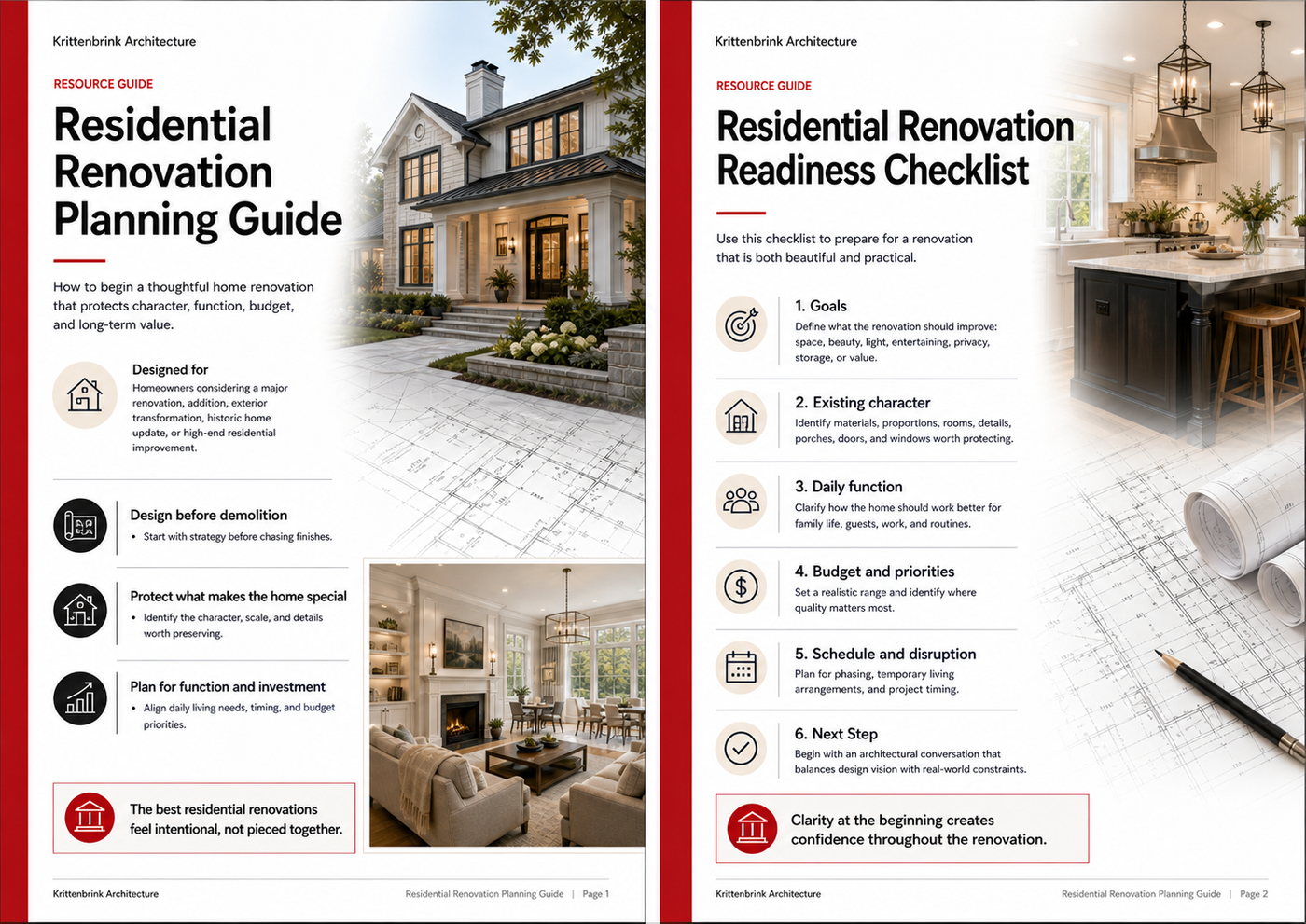
Planning a home renovation? Learn how architectural planning protects character, function, budget, beauty, and long-term residential value.
A residential renovation should feel intentional, not pieced together. Whether you are planning a major home renovation, addition, exterior transformation, historic home update, or high-end residential improvement, the strongest projects begin with architectural clarity.
Before demolition, finish selections, or contractor pricing, homeowners should understand what they want the renovation to improve and what should be protected.
Good residential design balances beauty, function, budget, character, daily life, and long-term value.
Design Before Demolition
Many homeowners begin renovation planning by thinking about finishes, fixtures, or individual rooms. While those details matter, they should come after a larger strategy.
Architectural planning helps determine how the home should function, how spaces should connect, what structural or code considerations may exist, and how the renovation can feel cohesive rather than patched together.
Protect What Makes the Home Special
Every home has a character worth understanding. This may include proportions, windows, doors, porches, room sequences, materials, millwork, exterior details, natural light, or the way the home sits on the site.
A thoughtful renovation identifies what should be preserved before deciding what should change.
Plan for Daily Function
A beautiful home also needs to work well. Consider how the renovation should improve family life, entertaining, storage, privacy, work-from-home needs, accessibility, circulation, and daily routines.
Residential architecture should support the way people actually live.
Set Budget and Priorities Early
Renovations often involve competing priorities. Homeowners should identify where quality matters most, what can be phased, and what decisions will have the greatest long-term impact.
Early architectural planning helps connect design vision with realistic budget expectations.
Prepare for Schedule and Disruption
Home renovations can affect daily living. Before beginning, consider phasing, temporary living arrangements, construction access, project timing, and how the work may impact the household.
Planning for disruption early can make the renovation process smoother.
Begin with an Architectural Conversation
A strong residential renovation begins with a conversation about goals, character, constraints, and possibilities. Clarity at the beginning creates confidence throughout the renovation.
Planning a Home Renovation?
Krittenbrink Architecture helps homeowners approach residential renovation, additions, exterior transformations, and high-end improvements with clarity and care.
Download the Residential Renovation Planning Guide or contact Krittenbrink Architecture to begin the conversation.